

My Life in Versailles (2026)
 by John Doe
 3.8K recommendations
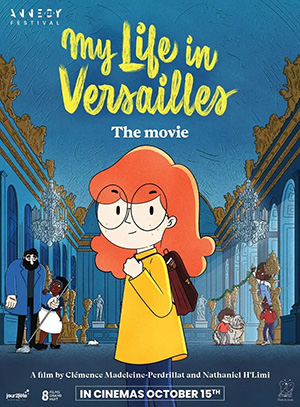
Release Date: 2025-08-30(Angoulême Francophone Film Festival) / 2025-10-15(France) / 2026(China Mainland)
Director: Nathaniel Hlimi, Clémence Madeleine-Perdrillat
Cast: Nina Perez-Malartre, Emi Lucas-Viguier, Malcolm Vallet, Anne Alvaro, Céline Ronté, Jacques Weber, Ariane Ascaride, Thierry Lhermitte, Antoine Reinartz
Production: Maybe Movies, Doghouse Films, Bidibul Productions, Mélusine Productions
Synopsis of the My Life in Versailles
My Life in Versailles, bearing the full French title La vie de château - Mon enfance à Versailles, stands as a tender cross-border animated family drama co-produced between France and Luxembourg, officially unveiled to audiences across global markets in 2026 after its early festival and domestic French rollout. The heartfelt feature is co-helmed by dual directors Nathaniel Hlimi and Clémence Madeleine-Perdrillat, a creative pair dedicated to gentle, character-driven storytelling that rejects flashy commercial animation tropes. A tight-knit writing trio shapes its thoughtful narrative framework: Olivier Demangel, co-director Clémence Madeleine-Perdrillat, and Alice Vial craft a script rooted in raw, authentic childhood grief rather than saccharine family resolutions. Distinct from the sleek, polished CGI aesthetics dominating mainstream American animated blockbusters, the production leans fully into a soft, hand-textured French picture-book art style, with muted watercolor washes, delicate linework, and subtle texture layers that evoke the warmth of vintage illustrated story volumes. Set against the unmatched, sprawling grandeur of the Palace of Versailles, the plot centers on eight-year-old Violette, a young girl upended by the sudden, devastating passing of both her parents. With no other immediate family to take guardianship, Violette is relocated to reside with her paternal uncle Régis, a gruff, reserved man who works full-time as an on-site maintenance technician tasked with preserving and repairing the sprawling historic palace complex. The pair are virtual strangers to one another, forced to share a cramped, modest staff apartment tucked away far from the gilded tourist halls, thrust into an unplanned domestic partnership fraught with awkward silences, unspoken sorrow, and zero experience caring for each other’s fragile emotional states. As Violette navigates paralyzing grief and overwhelming displacement, she begins wandering the palace’s lesser-known spaces: shadowed back corridors, cluttered restoration workshops, narrow service tunnels, and empty stately chambers rarely seen by visiting crowds. The Palace of Versailles evolves into more than just a scenic backdrop; it functions simultaneously as Violette’s quiet safe haven and a reflective emotional mirror, its worn, faded opulence mirroring the shaky, fragile new household bond she and Régis struggle to build day by day. A stacked roster of respected French voice talent delivers layered, restrained performances, including Nina Perez-Malartre as young Violette, Emi Lucas-Viguier, Malcolm Vallet as the guarded Uncle Régis, Anne Alvaro, Céline Ronté, Jacques Weber, Ariane Ascaride, Thierry Lhermitte, and Antoine Reinartz rounding out the supporting cast. Every line delivery prioritizes hesitant pauses and quiet subtext over dramatic declarations, capturing how grief-stricken people often struggle to voice their pain out loud. The film’s premiere journey began at the prestigious Angoulême Francophone Film Festival on August 30, 2025, followed by a wide theatrical release across France on October 15, 2025, before rolling out for broader international distribution throughout 2026, including a scheduled release in mainland China. Running a concise 81 minutes, the animated feature earned widespread critical praise across European press circles for its unhurried, restrained storytelling and lyrical, painterly visual language. Many critics drew thoughtful comparisons to the somber, intimate emotional tone of Manchester by the Sea, reimagined through the soft lens of a child’s wide-eyed wonder and vulnerability. The collaborative production team unites four established European studios: Maybe Movies, Doghouse Films, Bidibul Productions, and Mélusine Productions. What sets this animated piece apart from typical family fare is its unflinching respect for heavy emotions; it balances gentle warmth and quiet humor with honest depictions of mourning, constructing a deeply human narrative appropriate for multi-generational family viewing that validates grief while slowly tracing the fragile, gradual return of hope and connection.
Detailed Review & Analysis
Write a Comment (0)
No comments yet. Be the first to comment!