

Mu Guiying Takes Command (Peking Opera) (2017)
 by John Doe
 2.9K recommendations
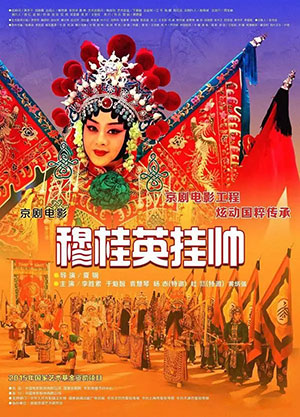
Release Date: 2017-04-21(China Mainland)
Director: Xia Gang
Cast: Li Shengsu, Yu Kuizhi, Yuan Huiqin, Yang Chi, Du Zhe, Huang Bingqiang
Production: China Film Co., Ltd., China National Peking Opera Company, CCTV Movie Channel
Synopsis of the Mu Guiying Takes Command (Peking Opera)
Released in 2017, Mu Guiying Takes Command is a meticulously crafted Chinese Peking Opera film helmed by director Xia Gang and penned by screenwriter Song Feng. Jointly produced by China Film Co., Ltd., the China National Peking Opera Company and CCTV Movie Channel, this production is a key part of China’s official Peking Opera film project, dedicated to preserving and revitalizing traditional opera art through modern cinematic techniques. Rooted in the well-loved classic Northern Song historical legend, the film unfolds against a turbulent wartime backdrop: Western Xia troops launch a large-scale invasion of the Song borderlands, throwing the imperial court into panic as no seasoned general is fit to lead the defense. To resolve the military crisis, the Song emperor orders a national martial tournament at the imperial training ground to select a new army commander. Wang Lun, the arrogant son of powerful minister Wang Qiang, dominates the early matches, relying on his family’s influence and brute force to claim an unrivaled position in the contest. Meanwhile, the Yang family, once the empire’s most revered military clan, has long retreated from court affairs, marginalized by decades of political snubbing and treacherous court intrigue. When young Yang Wenguang and his sister Yang Jinhua, the youthful descendants of the Yang household, learn of the national emergency and the martial competition, they venture into the capital to witness the tournament. Outraged by Wang Lun’s arrogance and bullying, the siblings challenge him to a duel. Skilled and fearless, Yang Wenguang defeats and slays Wang Lun in fair combat, seizing the marshal’s seal and securing the command post for the Yang family. Recognizing the legitimacy of Yang Wenguang’s victory and the unparalleled military prestige of the Yang clan, upright minister Kou Zhun pleads with the emperor to appoint Mu Guiying, Yang Wenguang’s mother and a legendary battlefield heroine, as the supreme commander of the Song army. Over fifty years old, Mu Guiying has endured years of cold disregard and unfair treatment from the imperial court, growing weary of devoting her loyalty to a monarch who fails to reward faithful servants. Initially, she firmly declines the imperial appointment, unwilling to return to the battlefield for a court that has abandoned her family. It is the earnest persuasion and profound sense of national righteousness from her grandmother-in-law She Taijun that stirs her dormant patriotism. Setting aside personal grievances and past injustices, Mu Guiying resolves to shoulder the responsibility of safeguarding the nation. She accepts the military seal, rigorously drills the troops, and mounts her steed to lead the army into battle against the foreign invaders. Headlined by renowned Peking Opera master Li Shengsu in the titular role, the film also features stellar performances from elite opera artists including Yu Kuizhi, Yuan Huiqin, Yang Chi, and Du Zhe. It perfectly inherits the essence of Mei-school Peking Opera, blending magnificent vocal renditions, delicate stylized movements, and standardized martial choreography, presenting a perfect fusion of traditional opera charm and cinematic aesthetics. Garnering widespread critical acclaim, the work won the Best Opera Film Award at the 31st Golden Rooster Awards and the Jury Prize at the 2nd Italy China Film Festival, earning high recognition both domestically and internationally for its cultural and artistic value.
Detailed Review & Analysis
Write a Comment (0)
No comments yet. Be the first to comment!