

Like A Rolling Stone (2024)
 by John Doe
 89.2K recommendations
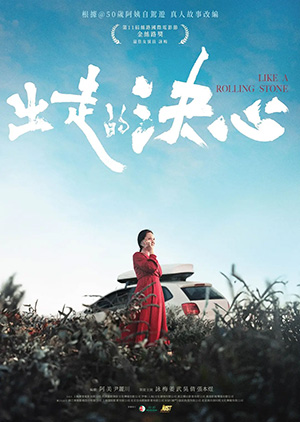
Release Date: 2024-09-15(China Mainland)
Director: Yin Lichuan
Cast: Yong Mei, Jiang Wu, Wu Qian, Zhang Benyu, Ma Su, Ai Liya, Li Yixiang, Li Jiaxin, Ze Nan, Chen Xixu
Production: Shanghai Huace Film Co., Ltd., Tianjin Maoyan Weiying Media, Zhejiang Huace Film & TV, Wanda Media
Synopsis of the Like A Rolling Stone
Like A Rolling Stone, officially known in Chinese as Chuzou de Juexin, is a grounded and hard-hitting 2024 Chinese family drama helmed by acclaimed female director Yin Lichuan, who co-wrote the intimate screenplay with seasoned screenwriter A Mei. Rooted in the viral real-life journey of Su Min, a middle-aged Chinese woman who embarked on a cross-country solo road trip to break free from decades of familial bondage, the film dissects the overlooked struggles of countless ordinary women trapped in lifelong sacrificial roles, sparking widespread national dialogue on marital oppression, patriarchal family dynamics, maternal obligations, and the long-suppressed right of middle-aged women to pursue self-fulfillment. Centered on the quiet yet resolute protagonist Li Hong, portrayed with profound subtlety by veteran actress Yong Mei, the story traces a lifetime of gradual erasure that defines the fate of many rural and suburban Chinese women. Born into a traditional patriarchal family that prioritized sons over daughters, Li Hong was denied the chance to pursue higher education in her youth, forced to abandon her academic dreams to support her brother’s studies and shoulder endless household chores for her parents. Hoping to escape the limitations of her original family and find emotional refuge in marriage, she stepped into wedlock only to be confined in an even more suffocating domestic predicament for nearly thirty years. Her husband Sun Dayong, played by Jiang Wu, embodies the mundane selfishness and emotional indifference prevalent in many long-term marriages; he takes Li Hong’s ceaseless devotion for granted, habitually dismissing her feelings, overlooking her efforts, and exercising subtle yet persistent control over her life and choices. For decades, Li Hong exists solely as a functional role: a dutiful daughter, a devoted wife, a selfless mother, and an unpaid full-time housekeeper. She devotes every ounce of her time and energy to raising her daughter Sun Xiaoxue, caring for elderly family members, managing all household affairs, and catering to her husband’s needs, completely abandoning her own hobbies, travel desires, and personal pursuits. Years of emotional neglect, unappreciated sacrifice, and suppressed grievances gradually take a toll on her mental health, leaving her suffering from severe anxiety and lingering depression. As she enters her fifties, after witnessing the trivial yet relentless cruelty of domestic life and realizing she has spent her entire life living for others, Li Hong finally awakens to her lost self. Driven by desperate longing and newfound courage, she defies all familial expectations and social norms, learns to drive from scratch in her middle age, packs her luggage quietly without seeking anyone’s permission, and sets off on a solitary road trip across China. This unplanned journey is not merely a physical escape but a spiritual rebellion, a long-overdue attempt to retrieve the independent life she has been told to delay and abandon her whole life. Boasting a solid ensemble cast including Wu Qian, Zhang Benyu, Ma Su, Ai Liya, and Li Yixiang, the film weaves together scenes of Li Hong’s youthful regrets, marital hardships, and middle-aged awakening, presenting a complete portrait of her suppressed life. Rejecting exaggerated dramatic conflicts and sensational plots, Yin Lichuan’s direction focuses on authentic, granular domestic details, making the protagonist’s pain and awakening deeply resonant and believable. Produced collaboratively by Shanghai Huace Film Co., Ltd., Tianjin Maoyan Weiying Media, Zhejiang Huace Film & TV, and Wanda Media, the 106-minute feature landed in mainland Chinese theaters on September 15, 2024. It quickly emerged as a pivotal cultural work of the year, garnering outstanding word-of-mouth reputation and high critical praise for its sincere, female-centric perspective that truthfully reflects the universal plight of middle-aged women in traditional family environments.
Detailed Review & Analysis
Related Movies
Write a Comment (0)
No comments yet. Be the first to comment!