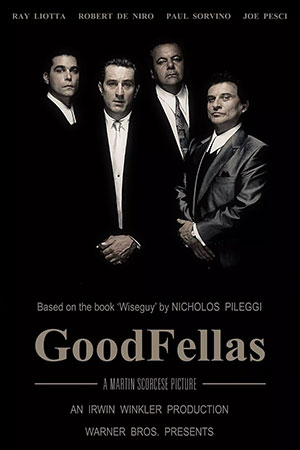


Goodfellas (1990)

Biography/Crime/Drama
Profile by John Doe
★8.7
Recommendation 123.5K
Goodfellas

Release Date: 19900921

Director: Martin Scorsese

Cast: Robert De Niro, Ray Liotta, Joe Pesci, Lorraine Bracco

Production: Warner Bros. Pictures, Winkler Films

Synopsis of the Goodfellas

From his childhood in Brooklyn, Henry Hill is mesmerized by the glamour and power of the local mobsters who rule his neighborhood. Determined to escape his ordinary working-class life, he ingratiates himself with the Lucchese crime family, starting as a errand boy and gradually rising through the ranks. Taken under the wing of the charismatic Jimmy Conway and the volatile Tommy DeVito, Henry embraces the mob lifestyle—fast cars, expensive suits, endless parties, and the sense that he is above the law. For years, he lives a life of excess, running heists, extorting businesses, and enjoying the protection and respect of the criminal underworld. But the mob’s code of loyalty is fragile: Tommy’s reckless violence leads to a deadly mistake, Jimmy’s paranoia after a high-stakes heist puts everyone on edge, and Henry’s growing addiction to cocaine threatens to unravel his carefully constructed life. As the walls close in—with the police closing in on their crimes and the mob turning on its own—Henry is forced to make a desperate choice: remain loyal to the family that made him, or betray them to save himself from prison or death.

Detailed Review & Analysis

GoodFellas isn’t just a gangster film—it’s a unflinching deconstruction of the mob myth, laying bare the ugly reality beneath the glitz of organized crime and exploring how the pursuit of power and excess becomes a slow, inevitable descent into ruin. Unlike conventional gangster narratives that romanticize anti-heroes or frame crime as a path to glory, this film uses Henry Hill’s first-person perspective to pull viewers into the seductive trap of the mob lifestyle, then peels back the layers to reveal its inherent cruelty and emptiness. What sets it apart is its refusal to moralize; instead, it lets the story speak for itself, showing how loyalty devolves into betrayal, how wealth becomes a prison, and how the thrill of breaking the law fades into constant fear and paranoia. Unlike works that focus on grand heists or violent showdowns as the core of the narrative, GoodFellas’ power lies in its mundane details—the late-night dinners, the casual brutality, the quiet moments of tension—that expose the mob as a dysfunctional family held together by greed and fear. The film rejects the idea of mobsters as larger-than-life figures; they are ordinary men consumed by their own appetites, doomed by the very system that once elevated them. What makes it unforgettable is its portrayal of addiction—not just to drugs, but to the status and adrenaline of the mob life, a dependency that destroys everything in its path. Long after the credits roll, what lingers isn’t the excitement of the heists, but the haunting realization that the mob’s promise of freedom is a lie—that those who join it are never truly free, but trapped in a cycle of violence and corruption until it consumes them. It’s a film that dismantles the romanticized image of gangsters, reminding us that power without morality is a curse, and that the life of a goodfella is ultimately a life of emptiness and regret.

Write a Comment (0)

0/200
☆ ☆ ☆ ☆ ☆
0/10

No comments yet. Be the first to comment!